Assumptions
Recently I was introduced to a gentleman interested in martial arts training. He was not really aware of what I teach or of what constitutes Nihon Koryu Jujutsu. He just assumed that because I taught it, that I must believe it to be “the best”. When I told him I did not believe the art I taught to be “the best”, an uncomfortable silence ensued. I finally broke this taciturn moment by explaining that there is actually no such thing as a “best” martial art. Despite a noble effort to grasp what I was talking about, the gentleman in question eventually regressed, unable to shake the impression that if I was not convinced that what I taught was superior to all other forms of martial arts, that I was somehow unworthy of teaching him. I politely encouraged him to look around, consider what I had said and contact me again if he had any further questions. A few days later I received an e-mail from this gentleman in which he explained that he had indeed found someone convinced that they taught the ultimate style of martial arts. It was called “mixed martial arts” because it embodied only best of all the styles. I just smiled to myself as I politely responded, congratulating him on his fortuitous discovery.
An ultimate martial art, huh? Now there’s an oxymoron for you. Every martial art is ultimately based on assumptions. In fact any training program formulated to address conflict is based on assumptions. It’s kinda like the old joke about bringing a knife to a gun fight. No matter how good you are, your assumptions define your training paradigm. Narrow your assumptions and you specialize, gaining the opportunity to excel at one task. Broaden your assumptions and you might be able address many different situations but at what level of expertise? It’s an intriguing dilemma isn’t it? Specialize, and be defeated by someone outside your strengths. Be a generalist and some specialist will hand you your head on a platter. What’s a martial artist to do?
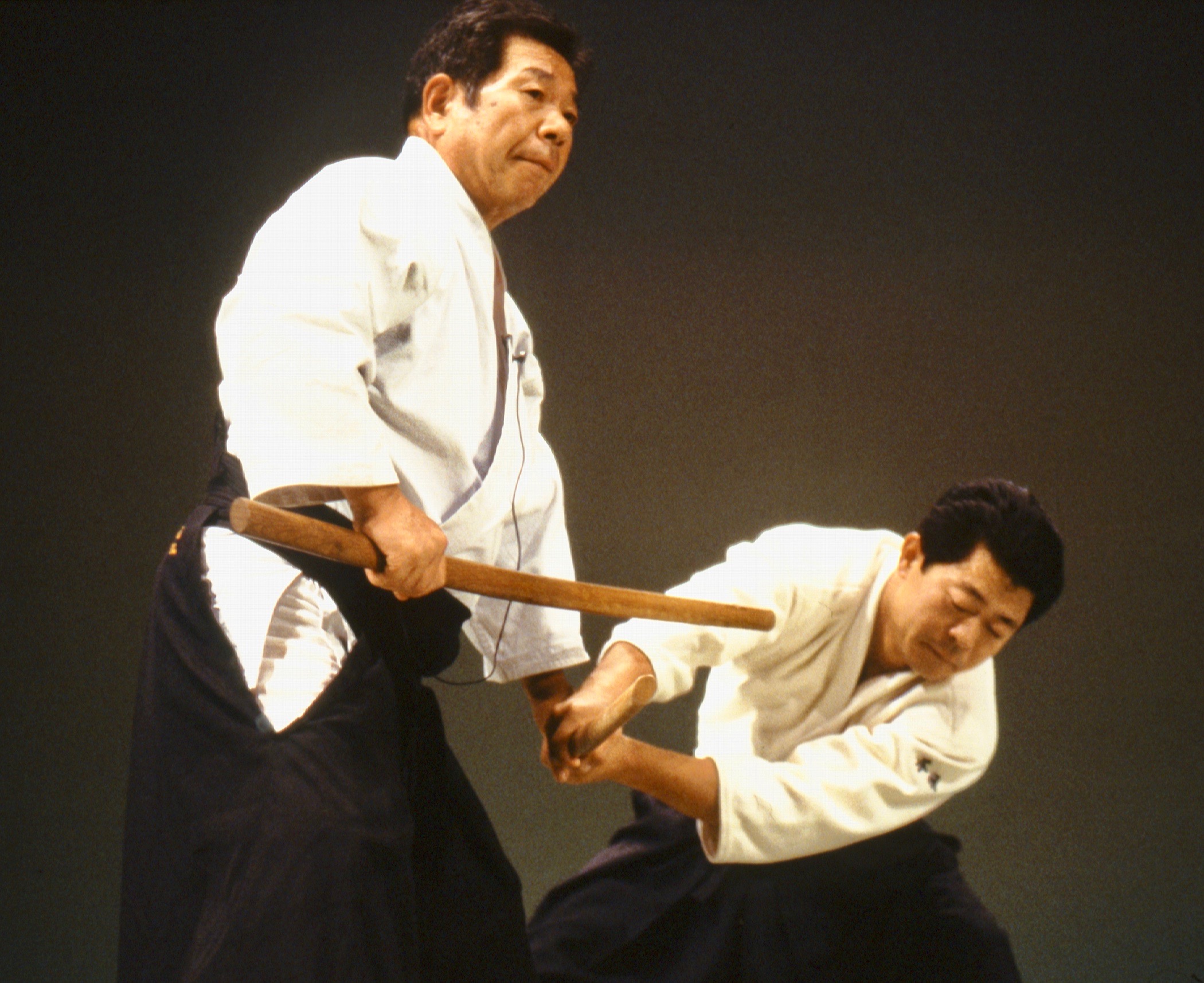
Years ago my teacher Yukio Takamura taught a seminar which touched upon this topic. The seminar subject was a comparison between sport budo and classical budo. During the lunch break a young karateka & wrestler, I’ll call Donny, loudly dismissed Takamura Sensei’s teachings as antiquated nonsense. In response to this pronouncement Takamura shook his head and chuckled while fiddling with his shoes. Donny, rather brash and full of bravado turned to Takamura Sensei and said, “Now don’t get me wrong old man, your stuff is fun to watch and all but your jujutsu is no match for my karate and wrestling. Takamura flashed a devilish smile at Donny and said, “Okay, show me”. Donny backed off a bit at this unexpected challenge and said “Well, I’m not going to fight you, you’re too old. How about him” pointing at Dave Maynard. Takamura responded “No, you were talking about my jujutsu, not his. I want you to show me.” Rather pensively Donny strolled out onto the dojo mat with Takamura Sensei as a hushed silence overtook the room. At first Donny appeared reluctant to do anything but when he noticed that all eyes were on him he revved up his courage and proceeded to execute a very nice double leg takedown, climbing up on what at first appeared to be a rather startled Takamura Sensei. As Donny attempted to continue his seemingly successful offense we noticed something flick around Donny’s neck. Suddenly, Donny’s tried to pull away, his head turning as red as a ripe tomato. In a few seconds he fell over wheezing. At that point we realized that a shoelace was resting tightly around Donny’s neck. Where had it come from? Takamura had secreted the shoelace in his sleeve and then executed a simple choke with it. As he revived Donny from his impromptu slumber he explained to the stunned witnesses that Donny had missed the point of the seminar altogether and made a dangerous assumption. He assumed that this was a contest with rules and that Takamura sensei was unarmed. The most interesting thing to me about this whole incident was that Takamura had deliberately pulled the shoelace from his shoe, placed it in his sleeve in plain sight and not one of us noticed. What a lesson rich incident this was…..
Now I’m sure that some MMA proponents will roll their eyes at this interlude and remark that it proves nothing. They will say venues like Pride and UFC prove you must do everything in budo well and that Takamura Sensei with a shoelace couldn’t defeat the likes of Matt Hughes or Sakuraba. That’s probably true and sounds convincing enough but such a dismissal misses the point. The truth is that to be successful in a venue like the UFC your time is best spent training to confront the challenges you ASSUME you will meet in the ring. Training outside such an assumption is a waste of time. However, drop a Portuguese knife fighter into the UFC ring and the mixed martial arts guy will realize he’s really not a mixed martial artist after all, but instead a specialist in unarmed sport conflict who hasn’t “mixed” expertise in knife fighting into his supposedly mixed martial art…
Those nasty old assumptions ….
Now don’t get me wrong, I greatly admire the technical efficacy and extreme level of physical training the serious MMA practitioners like those in Pride or UFC display but outside the paradigm they train for they can be just as vulnerable as anyone else. It’s not the individual version of MMA itself that made guys like Rickson Gracie, Ken Shamrock, Sakuraba or Matt Hughes champions. It’s really their creativity within each venues rules and the extreme level of training they have devoted to obtaining their skills. Each of these guys within the paradigm of what they do has trained himself to an extreme level. That’s the real secret to the best style of budo…..Training intensity!
So don’t get hung up in training in the ultimate martial art. You will be chasing assumptions forever. Instead pick an art that makes assumptions in line with what you value or desire and then train with a level of dedication equal to what you expect to get from your martial art. If you’re a police officer this will probably be a very different from a college professor.
In the case of the gentleman who contacted me in search of the ultimate martial art, I guess it is human nature to seek out someone else’s version of what’s best when one has scant experience to base an opinion on, but it is amusing to note how many people studying martial arts beyond a beginners level fail to progress beyond the myopic view that there could be any such thing as an ultimate martial art.
Remember, the only accurate assumption in budo is that your assumptions are never 100% correct.
Toby Threadgill
Takamura-ha Shindo Yoshin-ryu
Toby Threadgill — March 14th, 2006 (add comment)
Reader Comments
Chuck Clark writes:
Toby,
Great story and, as usual, your points about assumptions are true, in my opinion. Intuitive, creative decision making is what all good budo should teach. The only truly “best waza” is the one that just worked. Next time it will be different.
Chuck Clark
Jiyushinkai Aikibudo
Robert Goldsworthy writes:
This story also reminds me of an old saying, “he who emphasizes everything emphasizes nothing.” A friend of mine that is a U.S. Army veteran also told me, “he who defends everything defends nothing.” A Martial Art cannot be all things to all people.
—Robert Goldsworthy
Liam writes:
Thanks for the lesson in assumptions. It also reminds me to be in the present moment in any situation, and especially of the martial nature, to be aware of opportunities as they present themselves — and they always do.
—Liam Eddy
Nev writes:
Toby,
This is one of the most salient articles to appear. The point you make is pivotal and gets to the heart of Budo and life itself. Good to read so well articulated.
Thanks,
Nev
Phill Schwalger writes:
I enjoyed what you had to say. I appreciated the compassion shown to allow that person who came to you to find his own path and his own insights that was awesome. I liked how you addressed what my shihan has suggested is a wood intent “mine is best” flavour. Some responses in the forum section indicated what happens when people with a tendency for wood feel threatened. I enjoyed your article heaps. I get a real sense of wisdom and humility in your thoughts. You must have had great teachers. Very thought provoking.
cheers for that ka kite ano
Phill
Ellis Amdur writes:
I was travelling to NY the other week, and planned to work-out with some friends in Buko-ryu. I carried my practice - PRACTICE - kusarigama in my carry-on. It is one of those wooden kama, with a chain attached and a pseudo-weight (actually a kangaroo scrotum stuffed with uncooked rice). To make a long story short, I got stopped. The whole line stopped. The TSA guy held it up and announced to the world, “Man, I know what this is. It’s a whatchacallit. Folks, this man here is one of the only men in the Western World who is an expert at this thing. There’s a guy here in NY, a black dude, he’s the grandmaster.”
“Ronald Duncan?” I asked.
“Yeah, that’s the dude. You know him? Man, I know what this is, you were just travelling and training, right? But I got to write you up.”
So they took me to an office and we talked about this and that for 10 minutes, until the police came. After some conversation, I said, “I understand your perspective on this. But honestly, I didn’t think of it as a weapon. It’s just a piece of practice equipment to me.” One officer got a little heated. Took the weight in one hand - (I refrained from telling him what it was made of) - and shook the chain and said, “You could strangle someone with this! Just loop it around his neck!”
I thought of pointing out that a chain is easier to counter because of the size of the links, you can often dig a finger or two under and reduce the pressure. A shoelace, on the other hand … … but wisdom won out, and I kept my smartass mouth shut. Packed it up and shipped it in check-in luggage, escorted by two transit police officers.
A final thought occurred to me when I went back through the scanner, taking off my shoes again. “Thank God that shoe-bomber had not been an underwear bomber. We’d have some long delays.”
Patrick Auge writes:
We’d rather study a well advertised mediocre system than a little known good one, wouldn’t we?