Aikido and Psychotherapy 3 — The “limits” of ukemi
In the last “Aikido and Psychotherapy” blog I wrote about ukemi practice, arguing that the same functional principles apply whether we are dealing with a powerful throw or a life-crisis: confidence, relaxation, letting go of attachment to a preconceived outcome, and so on. However, as someone pointed out to me in a response, “the aikidoka comes prepared so to speak, as his sensei has taught him or her how to react properly (in other words the basics are there). In real life that is not the case - people are thrown in the deep without a lot of preparation…”
I could not agree more, except to say that in my experience being “thrown in the deep” can happen a lot on the mat too! Aside from that, this reader’s email touched upon some questions that had also been in the back of my mind as I was writing the previous blog, and that mainly have to do with what I would call the “shadow” side of ukemi, or the many times when we end up getting hurt and overwhelmed by painful throws or life situations in which we just don’t seem able to find the path of least resistance. It’s pretty easy to see the value of ukemi when things work out, so to speak, but what should we make of the times when they don’t? If, as I believe, ukemi practice can open up the possibility of finding some level of safety and growth in the middle of any kind of potentially traumatic event, am I also to believe that when I find myself hurt I must have messed something up?
I think that’s a pretty interesting question, but after much consideration I must say that my personal answer to it is an unequivocal no. While as a human being I have certainly had my fair share of blame, shame and guilt, I have to say that one of the greatest gifts of being a psychotherapist has been learning that those feelings tend to provide an extremely dirty and low-grade type of fuel for change, if anything. In fact, it may be interesting to know that in psychotherapeutic lingo shame and guilt are often referred to as “toxic emotions”…
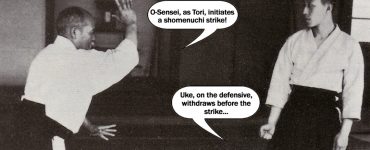
Rather than searching for mistakes, I think it’s much more helpful to take in whatever happened — especially when it did not feel that good — simply in terms of feedback. Don’t get me wrong, issues of accountability are very important and need to be dealt with, but if I am busy thinking about the mistakes I (or someone else) made, I am leaving myself open for possibly more of the same. Of course it is very important to recognize that we may have done something wrong or that someone else might have wronged us, but once that’s done we have to be able to use that information in a constructive way, or we’ll end up stuck in a victim-perpetrator feedback loop. From a martial perspective, that would be equivalent to turning your back to nage after she has blocked your initial attack and is in the process of executing ikkyo, for example.
As we know, ukemi practice teaches us that the safest path is to maintain the connection with nage, to keep entering, to look for safety in the middle of the threat, rather than to turn away and try to escape, and I would say that this same kind of attitude is also very helpful when dealing with crises in “real life”. When things hit us without a warning, bad stuff that we have not deserved, do not understand, and that we were not prepared to deal with, the safest course will still be to keep swimming, rather than to stop and drown while we try to figure out why this is happening to us.
In working with people in crisis (myself and others), I have noticed an almost universal tendency to wonder “Why? Why is this happening to me? What did I do wrong?” These are all extremely important questions, and I see their constant recurrence as a possible proof that on some level we all instinctively seem to feel that life is not just a series of random events. The answers to these questions, however, cannot be rushed (as much as we would like to): the crisis itself is like a seed, our response to it (however we may label them, “good” or “bad”, our reactions will always provide us with some useful information if we take the time to acknowledge them) is like food for the plant, but in order to harvest the fruits we also have to wait for the plant to grow. Obsessing about why something “bad” is happening - or wishing that we did not have to deal with it in the first place - is a little bit like ripping the seedling out of the ground to check if it is growing or not. In the long run, it makes for a pretty desolate landscape…
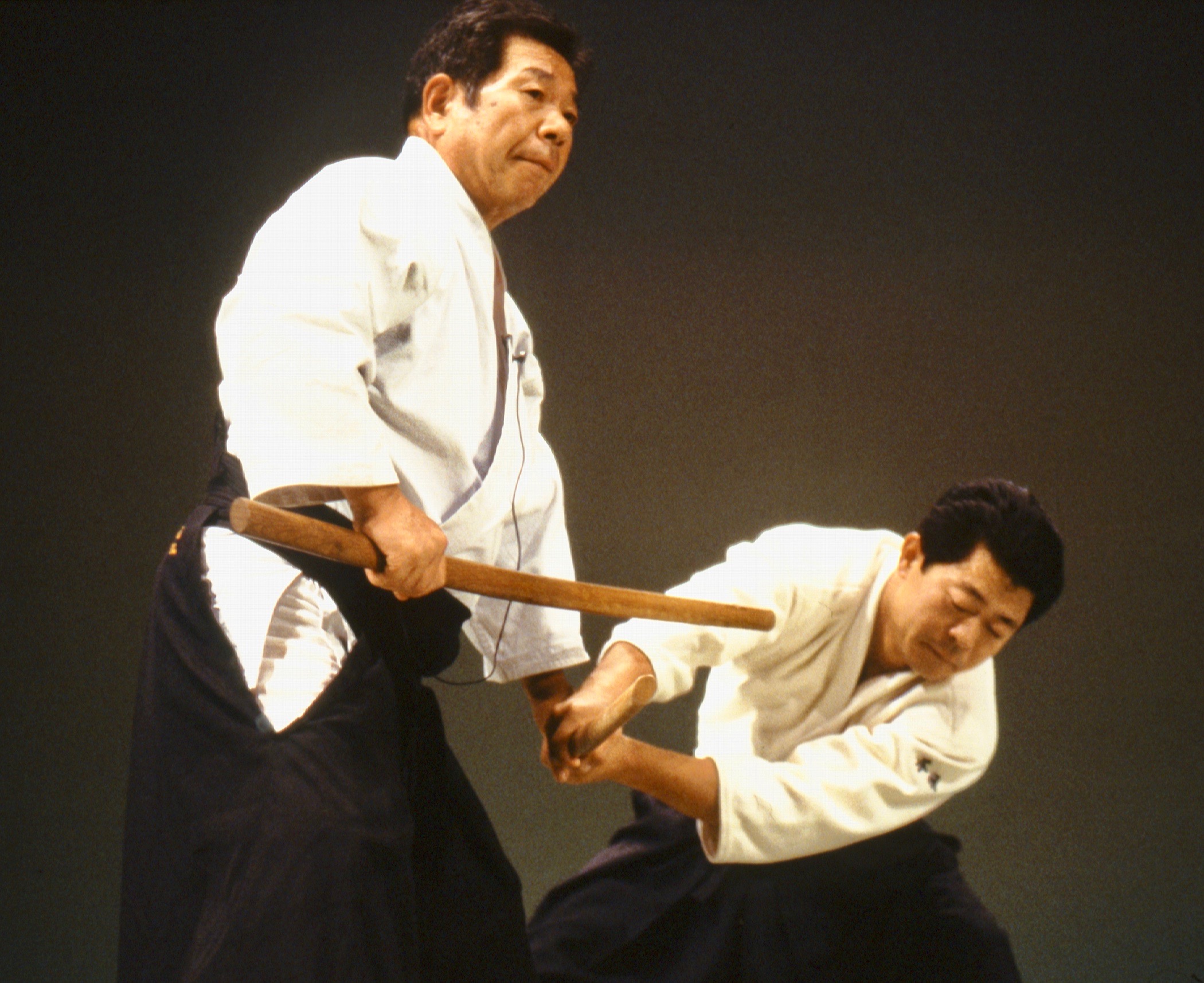
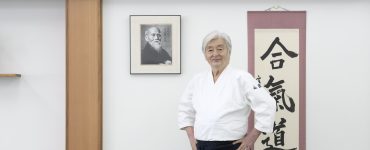
As an example, I am thinking about Seishiro Endo’s interview here on Aikido Journal in which he talks about badly injuring his shoulder and not being able to practice anymore. He could very well have quit aikido, but (thanks also to Yamaguchi sensei’s intervention) he decided not to. Instead of giving up, he resolved to radically change his way of practicing, and he says that for a long period of time he had to ask his training partners to fall for him. Eventually, after several years, Endo sensei came to a deeper understanding of aikido, which in his own opinion he might never have achieved without having to deal with that debilitating injury.
My point here is that the “limits” of ukemi might be only the result of our instinctive tendency to disconnect prematurely from a challenging situation and to turn our attention to the past or the future (both nonexistent from a purely factual point of view), while losing touch with the moment-to-moment unfolding of our experience. Since I just mentioned Endo sensei, last year I had the good fortune of attending one of his seminars and one of things that struck me the most was how irritated he seemed to be when his uke gave up responding too early and simply sprawled themselves on the mat, leaving him “hanging” in the middle of a movement. I would say that developing the ability to sustain a connection beyond what we might consider to be our natural comfort zone is a crucial element of ukemi practice that holds true on as well as off the mat.
Finally, if we translate this idea to psychotherapeutic work — and particularly to the healing of trauma — we may also see how the most potent shifts tend to happen when we are able to stay in touch with what is happening in the moment, rather than focusing on our ideas or memories of past or future events. Everything that needs to be healed or acknowledged, any negative consequence of traumatic experiences, any looming negative beliefs as well as any useful resources, it’s all right there in our moment-to-moment experience, if we just let ourselves feel it. Most of the time there is really no need to go digging for stories of childhood wounds, betrayals, and other traumatic events that “made us who we are”: the truth is that those things only exist insofar as they resonate in our awareness today, and while there is not much that we can do to change these stories from the past, once we start looking for how they are assimilated into our present experience the possibilities for change are endless.
Grazia Di Giorgio — February 14th, 2007 (add comment)
Reader Comments
Christiaan Oyens writes:
Thank you Grazia for another excellent article. A very interesting analogy, that of receiving ukemi and traumatic events that unfold in our day to day experiences. Regarding the email you received, I disagree with the statement. If you are truly committed in your attacks and the way you react when receiving ukemi, you are MOST CERTAINLY preparing yourself for real life situations. That is precisely why I chose to train aikido. You are learning crisis prevention but truly committed to responding appropriately in case of a real attack. If you feel that your training is not analogous to real life situations, then I suggest you look for a different Sensei because you are not being properly taught.
Gary Ohama writes:
The benefits of ukemi, and from ukemi, are one of the unique benefits we obtain as aikidoka. The painful mishaps don’t necessarily indicate that ukemi was done incorrectly. The negative connation shouldn’t be placed. One reason is that training is a relationship; things don’t always go right nor do we always “bat 1,000.” The demands of perfection can place too much ego into the relationship. Another reason is that there may not be a “good ukemi” even possible from the particular circumstance. When we are doing “Aikido” we are purposefully throwing into a safe ukemi. When we are doing “martial art” we are ensuring that an ukemi is not even possible to do as an escape.
For many reasons “bad ukemi’s” can occur.
So, as in life if we shouldn’t label as good or bad or wrong and place self blame and condemnaton. How can this be to my advantage and benfit is a more positive approach that makes any circumstance a building block that creates a stepping stone into self actualization. “All things work together for good.”