“The devil’s dictionary of aikido”, by Stefan Schroeder
Your true reference to aikido terminology:
Aikido
A method of self-defense that can be trained without hurting yourself.
Aikidoka
A woman or man who trains Aikido. Regularly. Well, once a year is regularly, but I am talking about Every Day here. If you are not training every day, you are a sort of amateur and that’s an insult in some circles.
Atemi
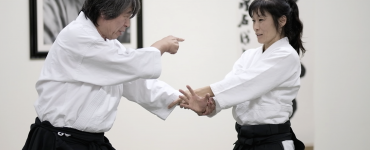
Thrust, punch, kick to create an opening in the uke to apply the aikido technique. If the atemi goes through, breaking your uke’s nose is only a bonus, not the primary purpose like in karate.
Belt
Any student will tell you that the belt is for holding the Keiko-Gi. But most of them will refuse to carry one that is below their own rank in the case they forget their own belt for the lessons. (This applies primarily to organizations where colored belts are worn. Black-belts have no problem whatsoever to tie a white belt around their waist, that’s why you see so many black-belts with active experiences in cross-training.
Bokken
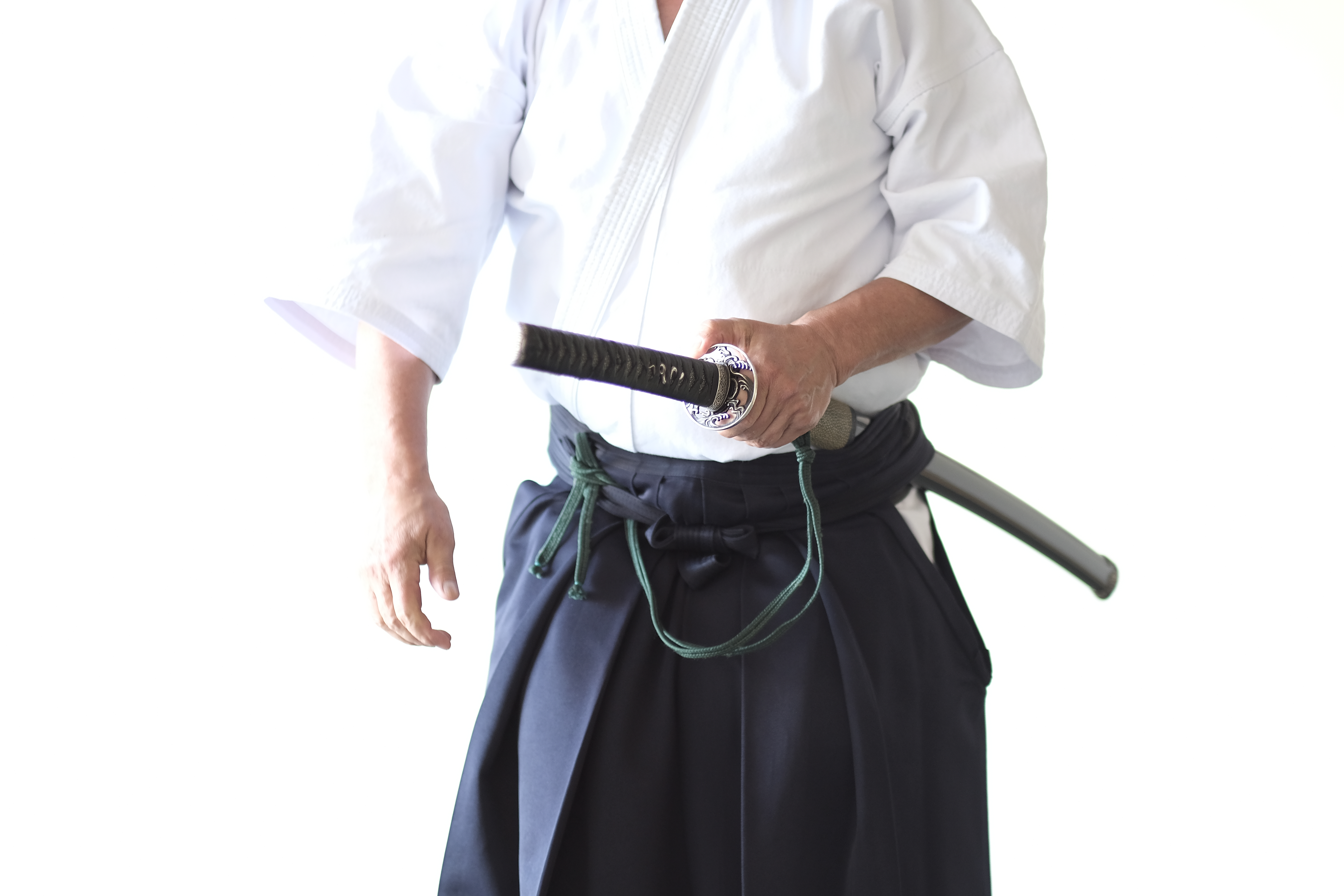
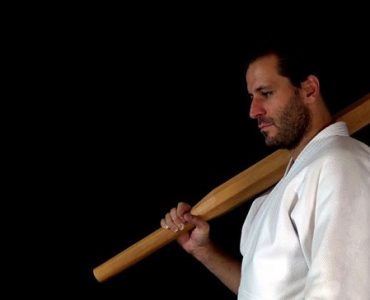
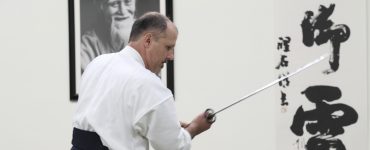
Wooden sword. Used because schools employing live swords quickly fall short of students.
Cross-Training
To train in several martial arts. There are several types of aikidoka who indeed cross-train.
Since Aikido is largely unknown to the general public, aikidoka are often recruited from defectors of other martial arts. They have an - under other circumstances- useful repertoire of moves, that they now painfully need to unlearn. The other type are aikidoka who take up karate lessons after reading Stanley Pranin’s grumble about the lack of attack skills of aikidoka, but soon quit, because they get the back of their head kicked while trying to apply shiho-nage.
Dan
Step. Shodan = First Step. A first step is something by a child aged approximately 12 month. Therefore a shodan is the aikido equivalent of someone who just learned to take a few steps before landing on his/her fanny. Pushing this image further, a marathon man is a something like sen-man-dan.
Do
Way. The concept that life is a journey, in contrast to the western idea that life is a chain of boring or interesting events. Anyone who went on a longer trip by train, involving changes, knows that this must not be an improvement.
Dojo-Dancer
A person who does not fall into the trap of believing that aikido can be used for self-defense.
Dojo
The place where you can have some nice work-out with some nice people. Preferably with wooden, Asian-flaired interieur, but that’s not a must. As Martin Luther (not “King”, the other one, who lived when the US of A had not yet been invaded by white people) put it “Any place can be your dojo. “
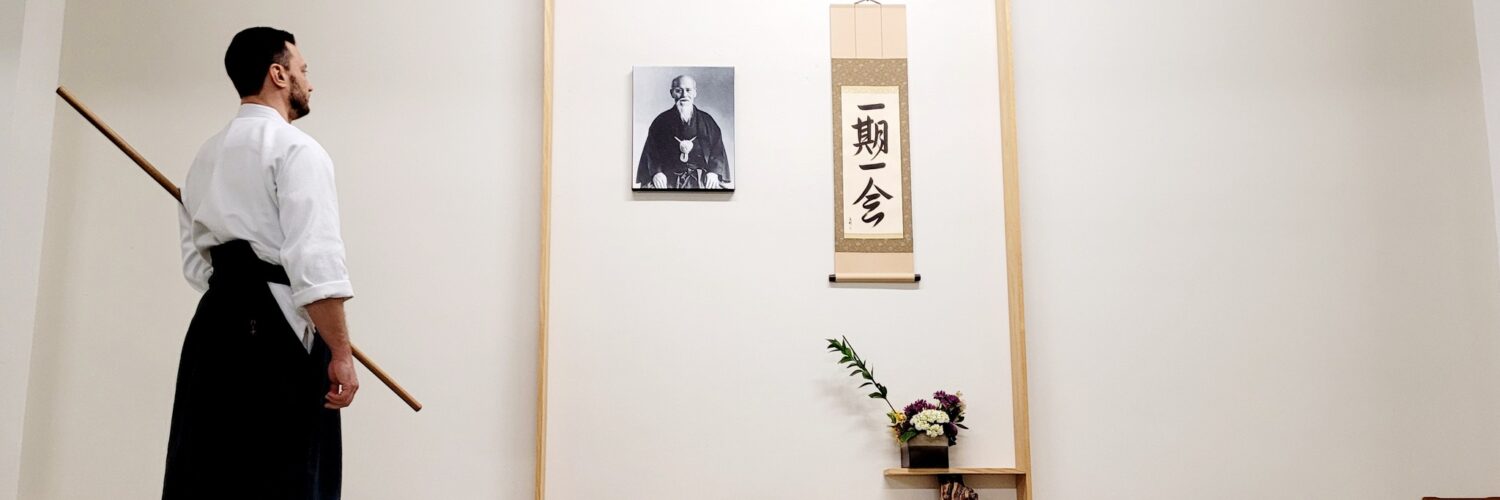
On the front side (kamiza), the dojo is equipped with a picture of _insert idol here_. Make sure you bow to it on any occasion, or the wrath of the serious students will come over you.
Fudoshin
Immovable mind. A mind that is undisturbed at the prospect of its associated body being hit hard. Like the moonlight is undisturbed by its shadow, or something like that.
Hakama
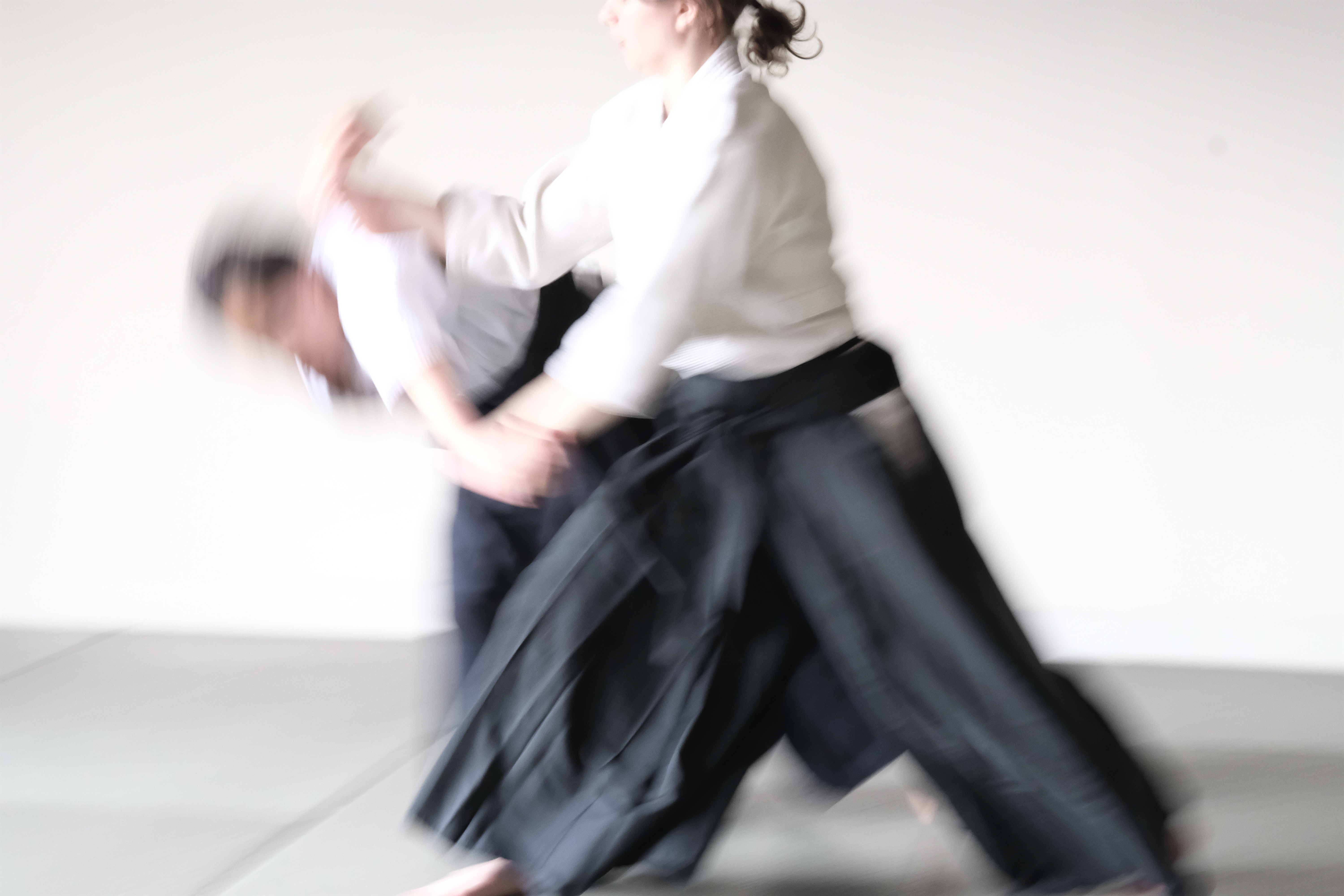
A skirt for men and women. Preferably in dark blue or black, so that you won’t have to wash it so often. After WWII a lot of black curtains, that were used during the war to prevent bombing of civilian populations with varying degrees of success, were superfluous and were easily reworked to hakamas, because a real good hakama made from silk was hardly affordable to most people.
Hara
Spiritual and physical center of the body. Esoteric concept to explain the feeling of centeredness. It is required to keep the One Point in your hara. This will keep you balanced. The hara is not only your belly, but also an abstract point in the very fabric of time and space, the calculation can be looked up in any decent physics book.
Irimi/Tenkan
Entering and Turning. Two modes of operation for nage. Irimi is preferred when uke shows an opening, where nage can step in and knock uke down. During a tenkan movement you evade first and expect uke to circle you. The two methods are complementary in the spirit of in and yo.
Jo
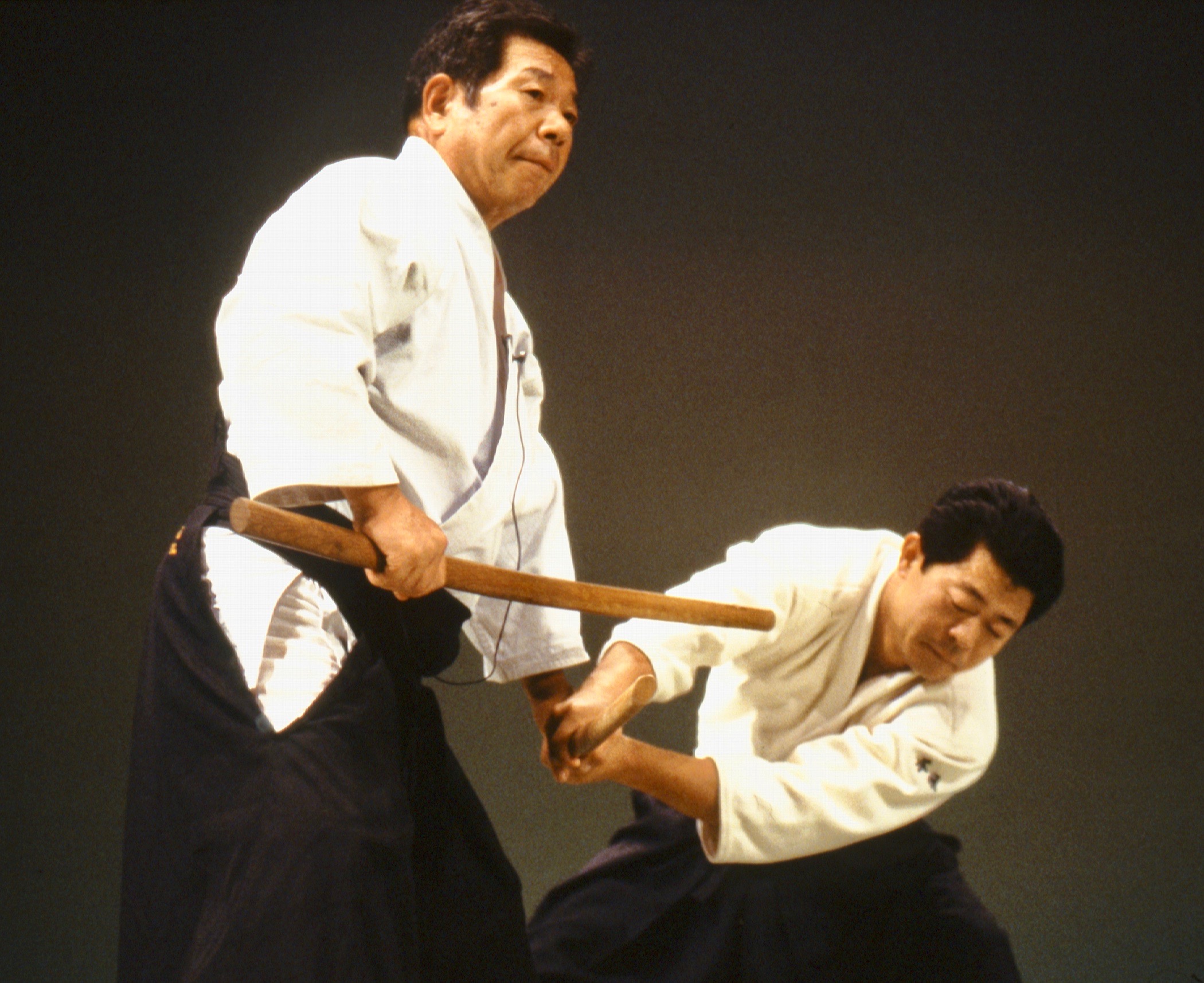
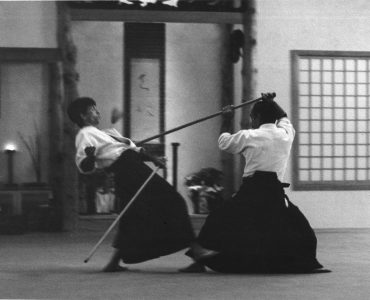
A wooden weapon you usually carry with you. Can be replaced by a (closed!) umbrella. The training with the jo - although seldom carried out when your teacher’s teacher name is not Saito - can result in some serious injuries of those training next to you.
Kamae
Stance. The science of how to hold your body in a vertical position.
Kamiza
Honorary place in the dojo, defining where in a dojo is the front. Home of the protecting gods of your dojo. In many dojos a picture of the founder is hung here. If you leave some food on your kamiza as a gift to the gods, make sure to leave a window open so that the gods feathery representatives on earth can make sure that the gods really eat up.
Keiko-Gi
A white uniform usually made of cotton to make sure that masters and underlings are indistinguishable. See hakama.
Kiai
Fighting shout, primal scream. A sort of extremely loud outcry, applied together or replacing a fighting technique. The famous master Boduken was able to kill birds in flight with his kiai. He died in an embarrassing accident, when a dead albatross hit him hard on the head.
Ki
Esoteric concept, similar to force, that allows aikidoka to ignore the fact that the real world is governed by physics and not by superstition. Ki cannot be seen or sensed with any physical sense, therefore it resembles love. There are pitiful fellows walking on this very earth that will never feel either.
The `Force´ in the box-office-busting `Star Wars´ movies was modeled after this eastern `Ki´ and since Hollywood movies are the primary source of information about foreign cultures for many people, the reality of Ki is seldom questioned.
Ki in Chinese is `Chi´ or `Qi´, depending on transcription, like in Qi-Gong or Tai-Chi, but unlike in ar-chi-tect or fran-chi-sing.
Kokyu
Breath power. If you do not brush your teeth or eat lots of foreign food, you’ll soon discover the power of your breath. Only kidding. Of course, kokyu is the esoteric power that multiplies your power simply by breathing. Remember to breathe at all times, or your life will end rather soon.
Kuzushi
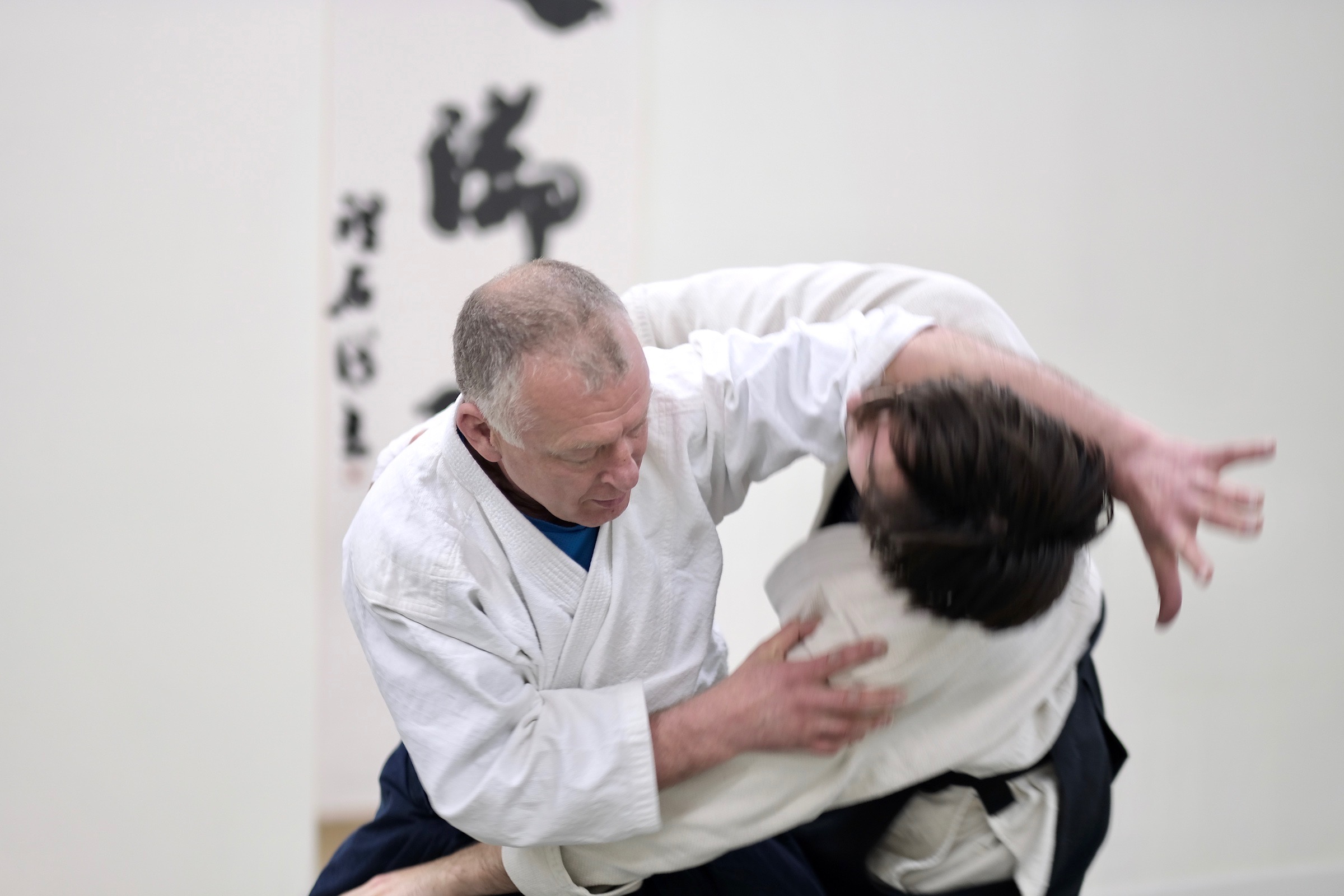
Balance breaking. To be able to execute an aikido technique it is necessary to break uke’s balance or s/he will be able to block and will not let herself/himself thrown. Ukes tend to roll out of politeness even if their balance is not broken. A behavior guaranteed to degrade the quality of aikido in the world.
Kyu
Beginner, Rookie, Newbie; people whose names you are not required to know since they will eventually quit and then you wasted the effort. You hardly remember the time you were kyu-grade, because you are now a respected member of the black-belt community. As a kyu-grade you are allowed to confuse left with right.
Lie
All sections in this dictionary.
Master
A person who trained Aikido for many years. Since obviously you can do things wrong for many years, too, s/he was awarded a black belt by some other people wearing a black belt (see ->bootstraps) to make sure everyone recognizes a master if you see them. In the west, you are considered a master when reaching shodan rank. In Japan you stop being a complete rookie, when reaching shodan.
Misogi
Cleaning. Aikido is misogi. Cleaning the dojo is misogi. Brushing your shoes is misogi. Misogi is the Polishing of the Mirror of the Self, so that you can see. Unfortunately most cleaners see only the omote of cleaning, which is making your hands dirty. Haven’t they heard of rubber gloves?
Nage
Defender, Winner.
Nage-waza
Group of techniques where you do not subdue your enemy, but only throw him away, allowing him to attack over and over.
Omote/Ura
Outside and inside. Like the dirty and the smelly part of shoes. Not only a physical property. The omote or outside aspect of something is everything that is obvious and visible. The ura is the hidden and invisible. The omote of aikido is a collection of fighting techniques. The ura is all things you feel and experience, although you cannot find appropriate words for it. The omote of cha-no-yu is making and drinking tea. The ura is unspeakable. Like the last word in the crossword puzzle which you cannot find any sensible solution for.
Osae-waza
Group of techniques which are determined by the fact that they end with a hold on the ground, so that your opponent’s friends can more easily kick you.
O-Sensei
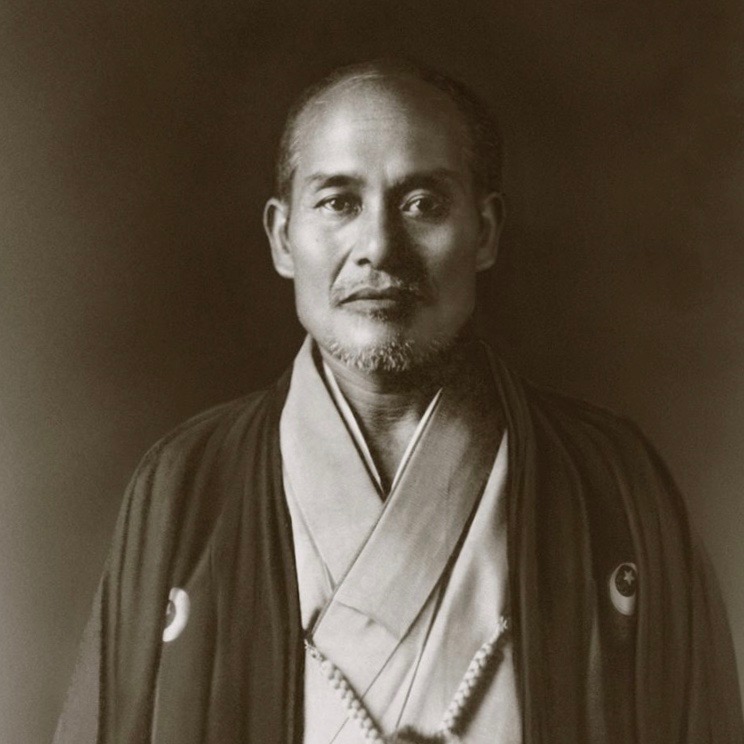
Japanese gentleman who took several lesser known martial arts and combined them to form aikido. He inspired all of us, so that we now became decent, humble citizens, helping grandma over the street, pay our taxes, fight oppression and racism, heal wounds and ignore our own petty desires. We can only stand in admiration with our mouths open at our own magnificence that was spawned by O-Sensei.
Randori
Fighting practice. However, the winner and loser of this staged confrontation is predetermined. The attacks are usually given, therefore the only difference to normal practice is that you’re free to choose the technique from the three techniques you really can do under stress.
Seagal, Steven
The best-known aikidoka in the world. Famed for kicking ass, defamed for depicting a ruthless ruffian. He counteracts O-Sensei’s message that aikido is Love, which was surely of some comfort to the guys whose arms and collar bones he (O-Sensei) broke during demonstrations of aikido.
Sport
Move your body in a certain way, allowing others to watch this on their TV set. There are two major aspects. When you ask people what they are interested in, many may say “sports”, but what they really mean is watching others engaged in physical activity. Interestingly, it is hard to find a precise definition, that’s why chess is considered a sport, mostly among chess players. This leads to the perverse situation that lazy, fat people become experts in football, baseball, whatever, who know the words, but don’t know the music. Now as a homework: Write a thousand times: The essence of sports can not be realized without participating in it. Watching and listening is a waste of time. Just do it. It’s not enough to buy cool sneakers. You have to run. Now. Stop reading. Run now! Hey, you’re still reading. You wimp.
Suwari-Waza
A method of training that is recommended by any orthopedist who really wants to buy this new Mercedes. Suwari-waza requires to walk and fight on your knees, which was very practical in medieval Japan, but is of no use today. Exception: Might be helpful when fighting hobbits, dwarfs or pygmies.
Sword
A tool to impress girls. See Bokken.
Tai sabaki
Evasive maneuver. Most efficient and practical aikido technique. As the master teaches “Best defense is to be elsewhere. “
Test
For teachers: The ultimate weapon to subdue contumacious students. For students: Since there are no competitions in true aikido, the only way to throw your excellence before examiners who don’t recognize brilliance if they see it (in case you fail) or who are a saint source of wisdom and an example for all other people in the world (in case you pass).
Uchi deshi
A martial arts student who lives in a dojo. An uchi-deshi is a sort of warrior apprentice, doing some management and maintenance next to training several times a day. In ancient times, becoming an uchi-deshi was required to join the clan of a koryu. Nowadays you need only money and (still) a letter of introduction, language skills, endurance and more money, because Japan is one of the most expensive countries in the world, and becoming an uchi-deshi somewhere else than Japan is way down lower on the coolness scale. Since being an uchi-deshi is a new stage in life, requires not much intelligence and is a full-time job, leaving no time for other activities, it is perfect for anyone who is socially deprived (having no friends), drops out of college or high school or otherwise does not know what to do with his/her life.
Uke
Attacker, Loser.
Yudansha
You are now a more advanced beginner. You are training eight days a week, sixteen hours a day, which you can afford since your wife left you and took the kids with her, because of your pathogen priorites.
Zanshin
Attention. You’re obligated to be careful even after you executed your technique, since the opponent may not be dead yet and not too happy about having his arm twisted.
December 6th, 2007 (add comment)
Reader Comments
Charles Warren writes:
Ambrose sent me a telegram from the place next to his favorite cantina. Yeah, they still have telegrams. Mostly used to wire money home from their day jobs in Los Angeles. He said, “While imitation is the sincerest sort of flattery, you might want to consult the original source on flattery. Meantime, until you have the personal experience of going from being a well regarded and frequently promoted combat engineer in the army that won the biggest war in American history to being an underpaid and underappreciated writer you’ll never get the appropriate twist of bitterness.”