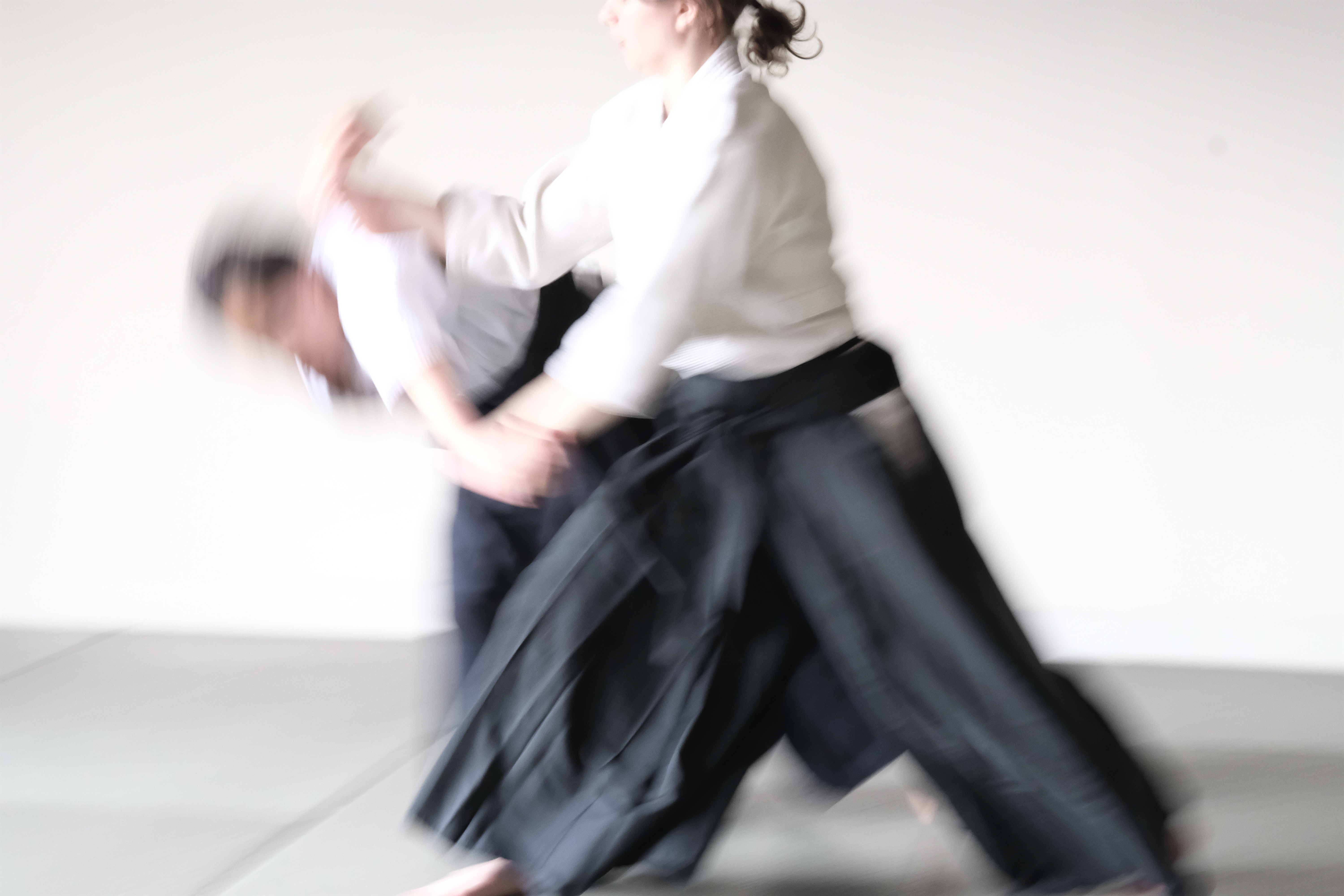
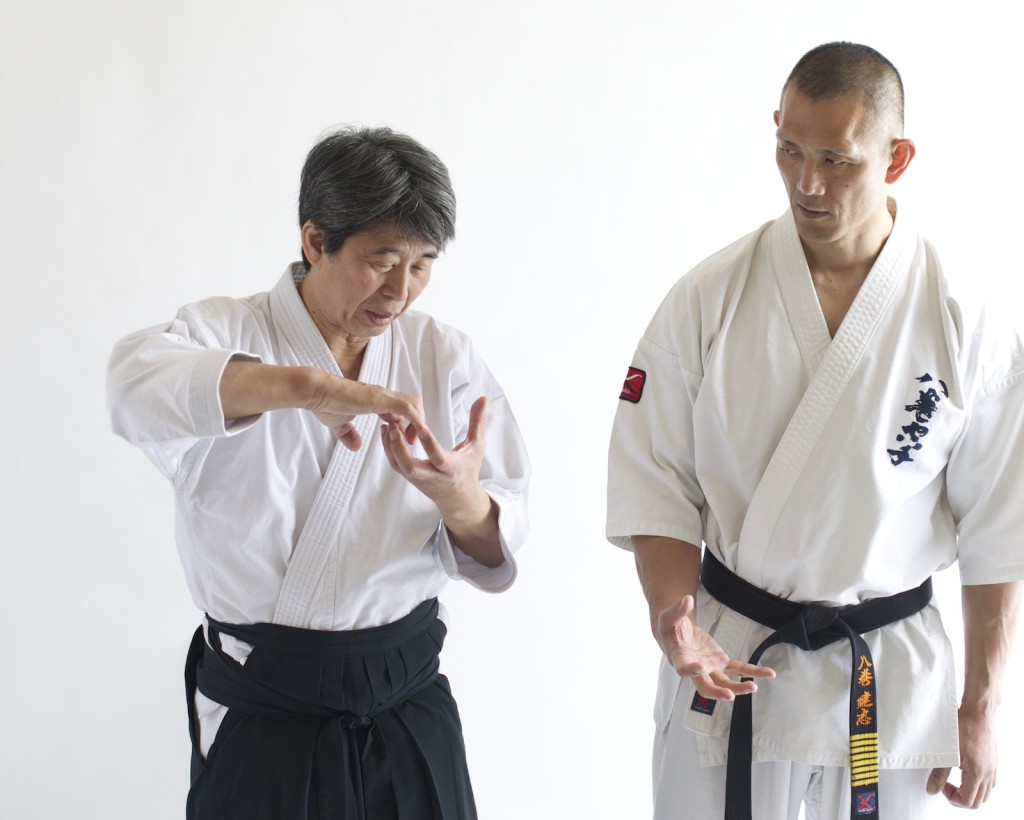
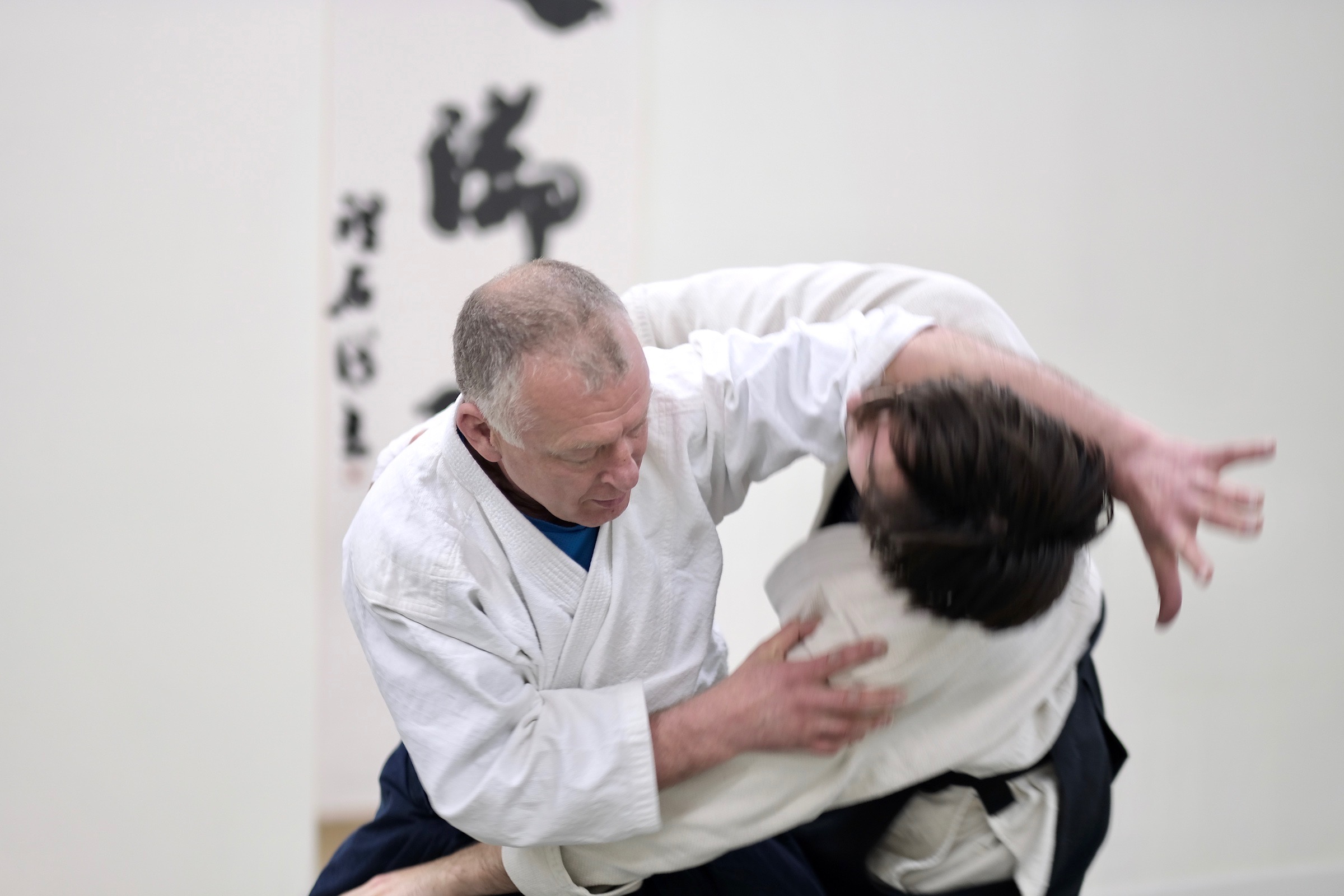
Cooperation During Demonstrations
I wrote the following article back in 1984 following a trip to the USA that I think presents a timely theme. It is titled “Cooperation During Demonstrations.” If interested, please have a look and post any comments you may have below.
The AIKI NEWS staff recently returned from a long, highly successful trip to the west coast of the United States during which 13 Aikido film presentations were given, each in a different city. A total of some 800 appreciative persons viewed the seven films we had selected from our collection of O-Sensei movies plus a beautiful color film shot primarily in Iwama which was kindly provided by Saito Sensei especially for our trip. The number of impressions and experiences collected during those 34 event-filled days would no doubt fill a small book if I were to have the time to record them. But as that is not possible here, let me relate to you one incident which did occur, not once but several times, that left me feeling extremely awkward and has presented me with quite a challenge in order to find a suitable response.
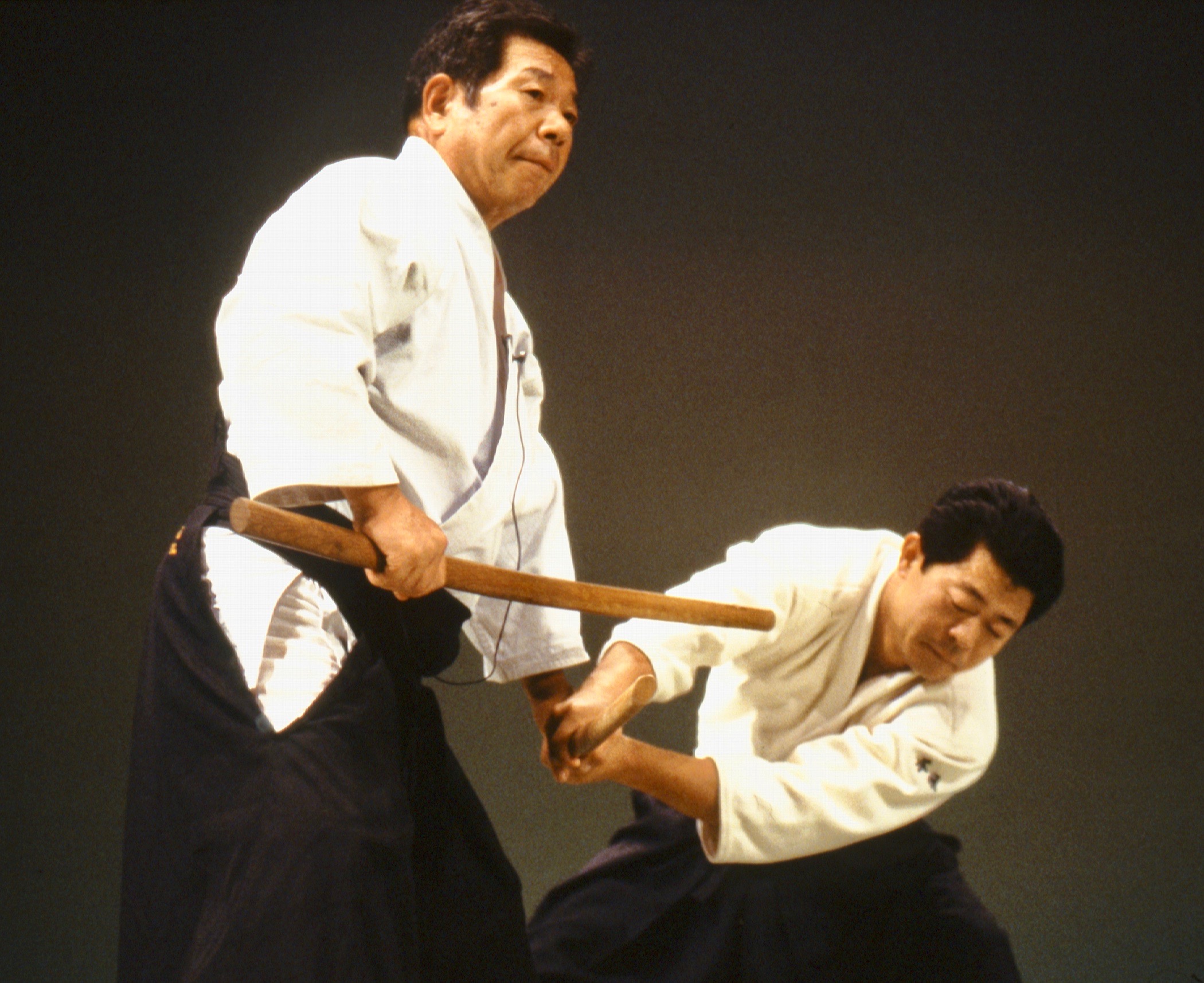
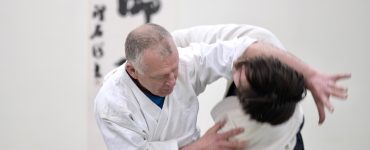
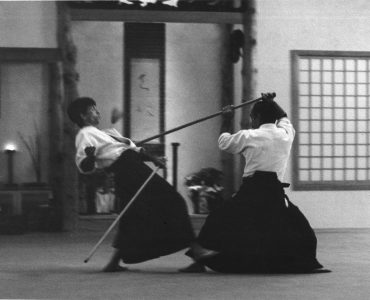
Several of the viewers of the O-Sensei films, one of them in fact being my father, had the following reaction upon seeing the movies: “This is nonsense, the attackers are all cooperating with the old man!” Well, how would you respond to that sort of deflating comment directed at the founder of Aikido, one of your life’s heroes? This especially when a careful viewing of many sections of the films indeed reveals what appears to be half-hearted, weak attacks often delivered late after O-Sensei has already begun to move. I assure you that this is the case since I have without doubt watched O-Sensei movies more times than any other mortal in the history of mankind! Having I hope duly established my credentials and by way of a response to the above comment, I think it might be fruitful to probe a little into the psychology of the attack in Aikido.
Click here to read the entire article.
Link to index of all articles in Aikido Journal archives
This huge resource of more than 600 articles is available to subscribers of the Online Aikido Journal. If you would like to support our efforts and read more and more articles, please click here.
August 24th, 2008 (add comment)
Reader Comments
Phil Davison writes:
HI Stanley,
I hear what you are saying, and agree with you to an extent - but I don’t think this is a black and white issue.
Some years ago (actually more than 20 yeas ago) when I was a fit young guy, used to hard sparring, I went to a demo of an elderly Chinese Tai Chi Chuan master. The Tai Chi master demonstrated one of the trademark Tai Chi moves where, with a double hand push, the opponent is sent flying backwards. Then he asked if anyone else would like to have a go. Of course I wanted to receive this technique, and I was lucky enough that he picked me - maybe he saw the gleam in my eye.
Now, as keen as I was to find out if his stuff really worked, I suddenly found myself in an unexpected quandary. I could move in with all my youthful vigour, and make his technique as difficult as possible, as much to say “lets see if you can do it now!” but really that would be a bit rude. The Tai Chi master was genuine, nice, skilled, old man - in his eighties as I recall. If I messed up his demo it would prove that I was an idiot. So I received the technique in the way that was expected, and went flying back across the room.
Even having received the technique I really don’t know if it would really work on a resisting opponent. The only thing to do would be ask him quietly if I cold have another go, when there was just the two of us, and see if he could budge me then - but plainly that was not an option.
I would not be surprised that you can see some of the same things happening in some of the last films of Ueshiba Sensei. Regardless of his actual skill, the ukes are filled with respect and admiration of the man, and their attacks reflect this, as far as I can be see in the video. Given that he must have been nearly 60 years older than them, and given the attitudes towards older authority figures in Japanese society, it’s hard to see how it could be different.
I find myself wanting to write, “ahh - if I was there, I soon know if that old man could throw me across the room” — but if I was there I’d find myself in the same position I was with the Tai Chi master. I have no doubt that if I was able to be magically transported back in time that I’d find myself flying across the room, and still not know how much if it was me flinging myself to make sure the old man looked good.
Francis Y Takahashi writes:
Stan,
with all due respect to your father, along with a host of others who do not understand the meaning of KEIKO, the full and complete explanation of the history, meaning and intent of an EMBU performance is long overdue. Aikido, O’Sensei, and those who understand the role of Uke vs. Nage owes no apology or explanation of their actions to those who do not.
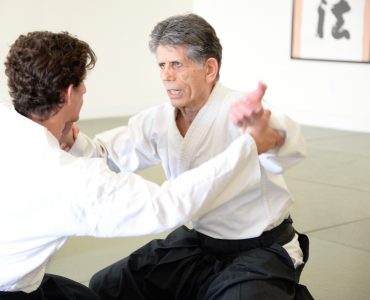
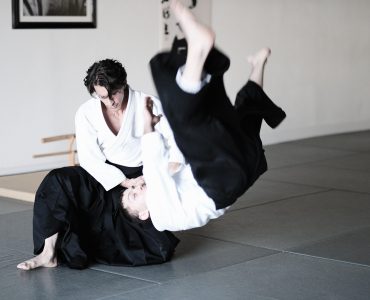
You and I, along with many of your readership, have witnessed countless instances of martial artists who explain and demonstrate their art with the appropriate co-operation of their “opponents”. Ushiro Sensei comes to mind amongst many others. Such instances are not meant to demonstrate mastery in a fighting situation, but rather as a platform to demonstrate the various forms of training simulating a real attack.
Professional wrestling employs a similar “give and take” philosophy, giving the fans a great performance while undertaking highly risky manuevers and techniques. Batting practice in baseball is not intended to show up the batter, but to help him or her further develop his co-ordination skills without the pressure to perform.
This may not be the forum to appropriately deal with questions of Aikido’s validity or ranking in the world of martial arts as an art to destroy the opponent. This would probably be best approached by an agreed upon forum of respected Aikido teachers, students and representatives of other martial arts systems as well. Count me in on such a venue.
Even as a scalpel is designed to cut body parts effectively, its true purpose is to help preserve body health and life itself. The training we see with O’Sensei, Ushiro Sensei and other magnificently qualified martial artists must be thoroughly examined as to true intent, purpose and philosphy of “No Harm” in training or demonstrations. To react with a knee jerk criticism of artistry so sublime, is beneath us, and we can only wait for the proper moment to appropriately explain or demonstrate, first hand, our commitment and sincere devotion to the art we love to those who may have another agenda.
Again, this is not an apology or excuse for any intentional or unintentional misunderstanding. It is a sincere invitation to anyone at anytime to meet and resolve their questions to everyone’s satisfaction. You have my number.
In Oneness,
Stanley Pranin writes:
Phil and Francis,
Your comments are very much appreciated. I just reread my editorial written 24 years ago and am scratching my head to figure out where, if at all, we disagree.
Dan Rubin writes:
Hi Stanley
I have long suspected that you were never satisfied with this editorial, as evidenced by the one you wrote eight years later entitled “An End to the Collusion” (http://www.aikidojournal.com/article?articleID=567). I think that these two editorials should be considered and discussed together.
Dan Rubin